
Mobile app development trends are strategic signals for enterprises planning their next phase of digital growth. As mobile becomes the primary interface for customer engagement, operations, and revenue generation, business leaders must understand which technologies deliver measurable ROI and which are simply short-term hype.
For businesses, the challenge is not adopting every trend, but selecting the right innovations that align with scalability, security, and long-term business objectives. This article highlights the trends that truly matter and how to turn them into competitive advantage.
For enterprises, mobile is no longer a branding channel or engagement experiment, it is a core revenue engine. From subscription models and in-app transactions to digital onboarding and customer self-service, mobile applications now sit directly on the revenue line. Ignoring mobile app development trends means risking slower growth, lower retention, and missed monetization opportunities in markets where competitors are rapidly innovating.
At the same time, outdated mobile architecture creates hidden costs. Technical debt accumulates when legacy frameworks, rigid backends, or poorly structured codebases cannot adapt to new user expectations or integrations. The result? Slower feature releases, higher bug rates, expensive refactoring, and difficulty scaling. Over time, maintaining an outdated mobile system often costs more than modernizing it.
Understanding current mobile app development trends helps enterprises make smarter architectural decisions that directly impact:
Time-to-market: Modern frameworks, DevOps automation, and cross-platform solutions reduce development cycles and enable faster product iterations.
Scalability: Cloud-native and microservices-based backends allow apps to handle user growth without major restructuring.
Security & compliance: Privacy-first design, encryption standards, and secure DevSecOps practices ensure regulatory alignment and risk mitigation.
Long-term maintenance cost: Clean architecture and modular systems reduce ongoing technical debt and lower operational expenses.
In short, tracking mobile trends is not about following hype, it is about protecting enterprise agility, financial efficiency, and long-term competitiveness.
🔎 Learn more about Native app vs Hybrid app
As mobile ecosystems mature, innovation is shifting from feature expansion to intelligent, scalable, and revenue-driven architecture. In 2026, leading enterprises are not just building apps, they are building adaptive mobile platforms powered by AI, automation, and cloud-native infrastructure. Below is one of the most transformative trends reshaping enterprise mobile strategy.
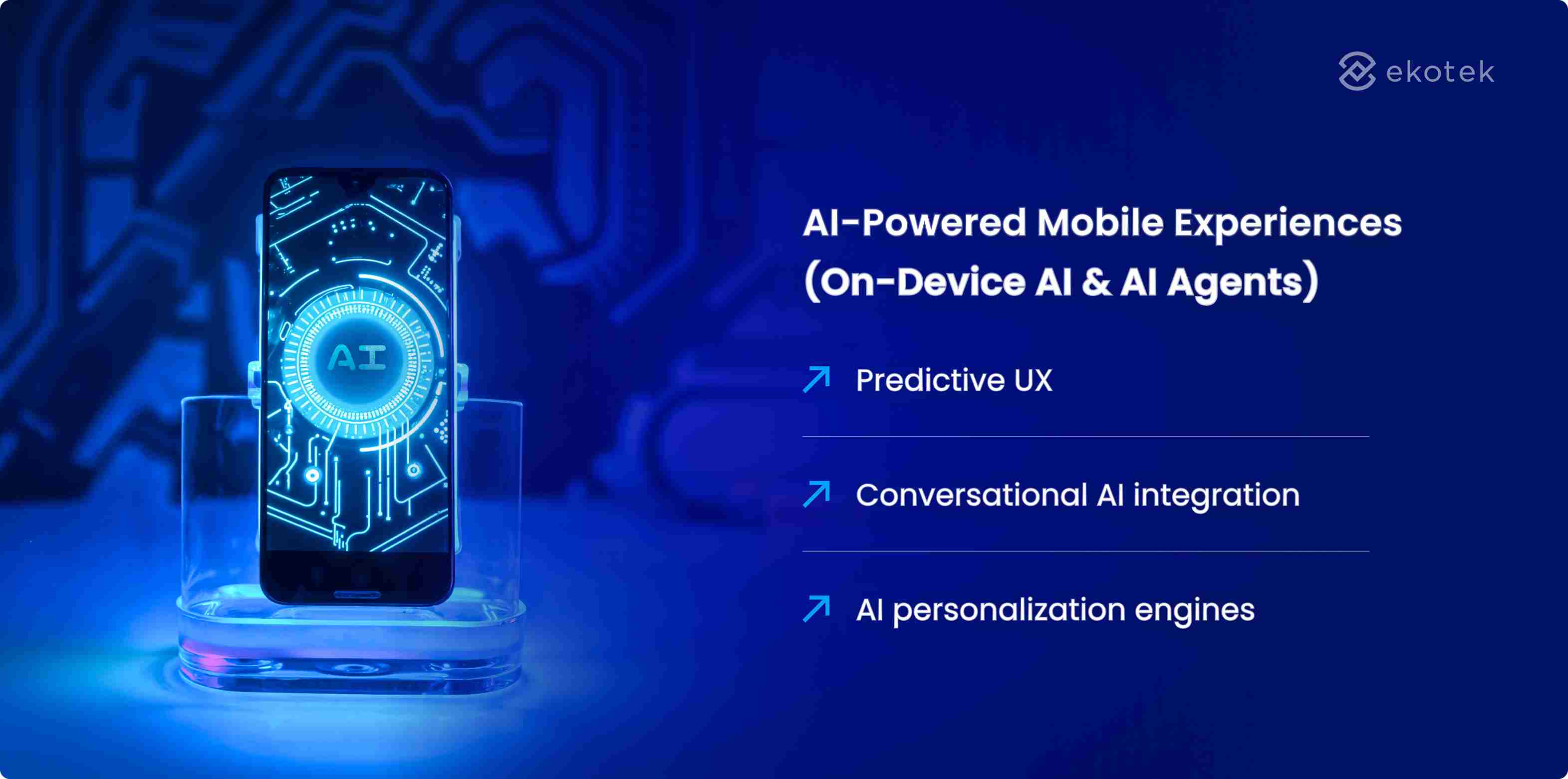
Artificial intelligence is redefining what users expect from mobile applications. Instead of static interfaces and rule-based flows, modern apps now deliver adaptive, predictive, and context-aware experiences powered by AI.
🔎 Explore the differences between Agentic Ai and Traditional AI
A key architectural decision for enterprises is choosing between edge AI (on-device processing) and cloud-based AI:
On-device AI (Edge AI):
Faster response times
Enhanced privacy protection
Reduced server costs
Ideal for real-time features and offline capabilities
Cloud AI:
More computational power
Easier model updates
Centralized data training
Suitable for large-scale analytics and complex models
Strategic implementation depends on performance requirements, compliance regulations, and cost structure.
From a business perspective, AI-powered mobile experiences directly impact revenue metrics. By delivering hyper-personalized journeys and reducing friction, enterprises see measurable improvements in user retention, session frequency, and customer lifetime value (LTV). In competitive markets, intelligent mobile experiences are quickly becoming a baseline expectation rather than a differentiator.
Cross-platform frameworks have matured significantly. What was once seen as a compromise is now a strategic option for enterprise mobile development. Modern frameworks like Flutter, React Native, and Kotlin Multiplatform deliver strong performance, stability, and scalability, making them suitable for many production-grade applications.
Here’s why enterprises are increasingly adopting cross-platform approaches:
Single codebase for both iOS and Android
Simultaneous feature releases across platforms
Shorter development and testing cycles
Faster MVP validation
This is especially valuable in competitive markets where speed directly impacts revenue.
Smaller, unified development team
Lower maintenance overhead
Simplified updates and bug fixes
Reduced long-term operational expense
Over multiple release cycles, cost savings can be substantial.
Modern cross-platform tools now offer:
Smooth UI rendering
Native API integrations
Strong ecosystem support
Improved performance optimization
For most business applications (e-commerce, fintech, enterprise platforms), performance differences compared to native are minimal.
Native development remains the better choice when:
Building performance-intensive applications (e.g., high-end gaming, advanced AR/VR)
Requiring deep hardware integration
Demanding highly customized platform-specific UX
Optimizing for maximum performance at scale
For decision-makers, the framework choice should align with business priorities:
Prioritizing speed and budget efficiency? → Cross-platform often delivers better ROI.
Requiring maximum performance and platform-specific control? → Native may be justified.
Planning for long-term scalability? → Architecture design matters more than the framework itself.
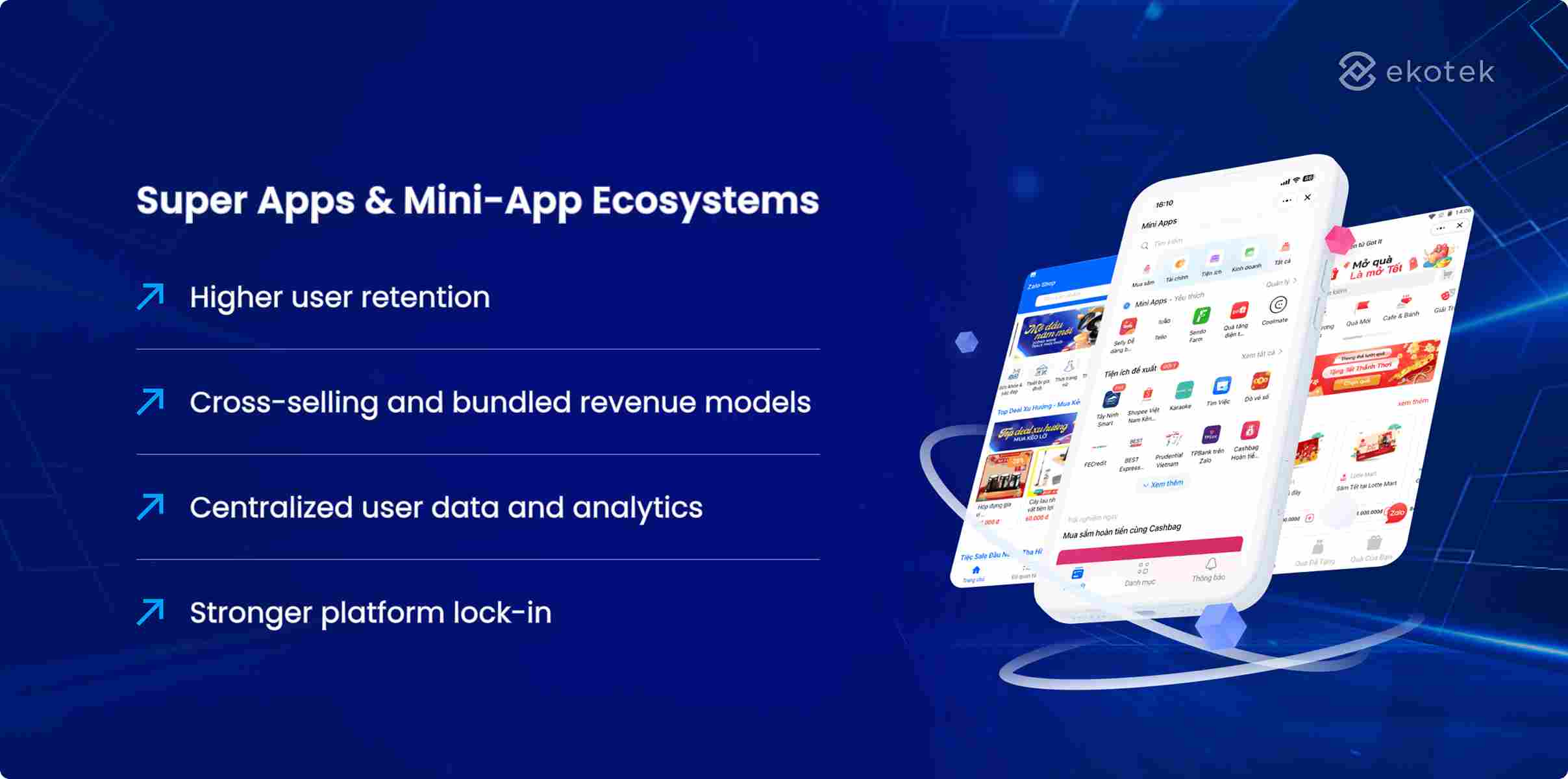
The rise of super apps is reshaping how enterprises think about mobile strategy. Instead of building isolated applications, companies are developing embedded ecosystems where multiple services coexist within a single platform. This model increases user stickiness, expands monetization channels, and creates network effects.
A super app integrates diverse services, payments, messaging, e-commerce, logistics, booking, loyalty programs, into one unified experience. Mini-app architectures allow third-party services or internal business units to operate within the same ecosystem without requiring separate downloads.
Key advantages include:
Higher user retention through multi-service engagement
Cross-selling and bundled revenue models
Centralized user data and analytics
Stronger platform lock-in
For enterprises, this model transforms mobile from a single product into a scalable digital infrastructure.
Super apps are particularly powerful in industries where multiple services naturally intersect:
Fintech: Digital wallets integrating payments, lending, insurance, and investments
Retail: Marketplaces combining shopping, loyalty programs, delivery, and financing
Mobility: Ride-hailing platforms expanding into food delivery, ticketing, and micro-mobility
These ecosystems increase lifetime value by keeping users within one platform instead of distributing activity across multiple competitors.
🔎 Explore our detailed breakdown of FinTech App Development Cost to understand budgeting factors
Adopting a super app model requires a strategic decision:
Standalone App Strategy:
Faster launch
Lower initial investment
Easier operational focus
Suitable for niche or specialized services
Platform (Super App) Strategy:
Higher complexity
Requires scalable architecture
Demands long-term ecosystem vision
Enables multi-service monetization and network effects
For enterprise leaders, the question is not whether to build a super app immediately, but whether their mobile roadmap supports ecosystem expansion. In 2026, platform thinking, even if implemented gradually, is becoming a defining competitive advantage.
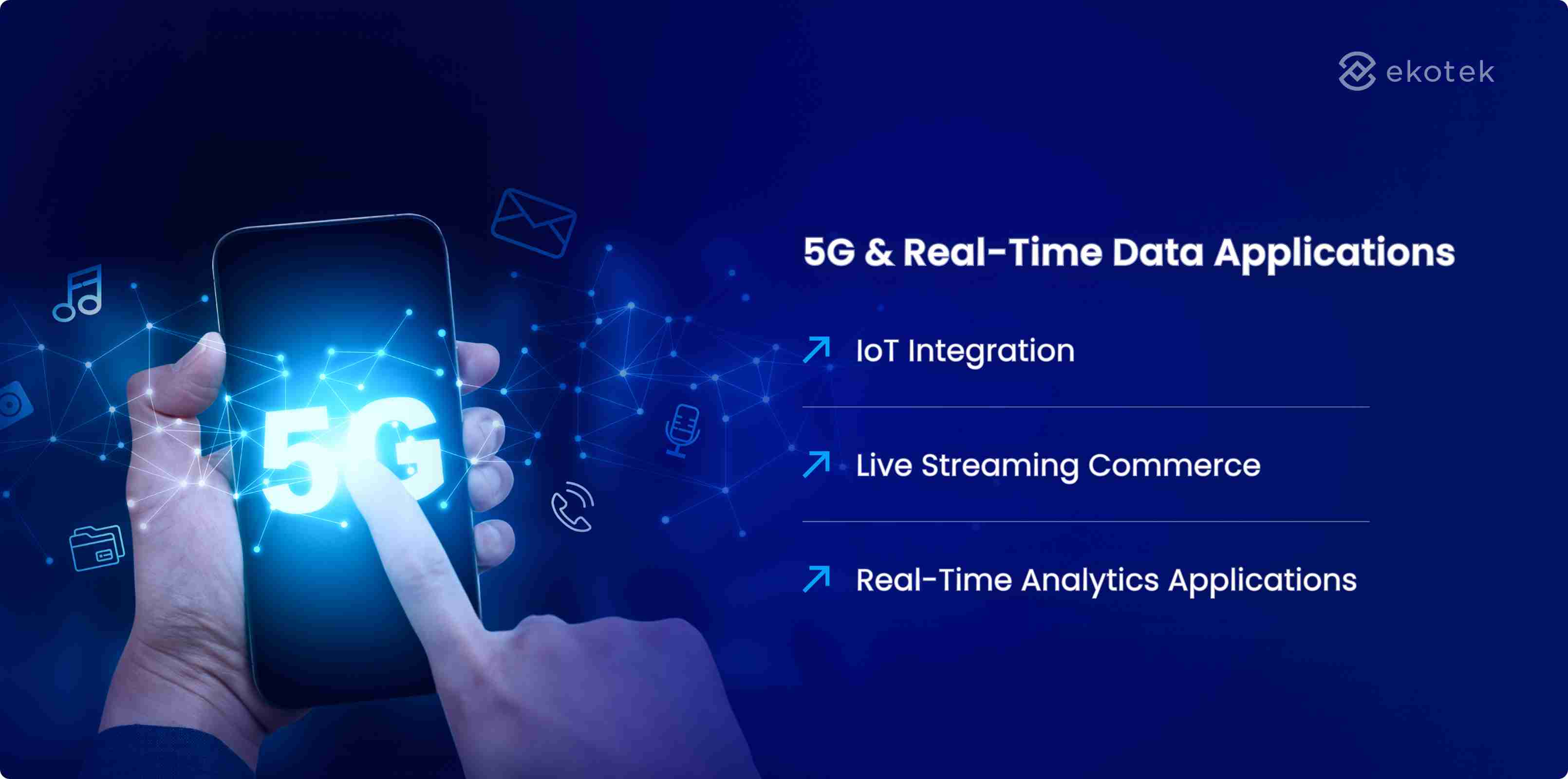
The expansion of 5G infrastructure is unlocking a new generation of real-time mobile applications. With significantly lower latency and higher bandwidth, enterprises can now deliver instant, data-intensive experiences that were previously limited by network constraints.
5G enables seamless communication between mobile apps and connected devices. Enterprises in manufacturing, logistics, healthcare, and smart infrastructure can build mobile platforms that:
Monitor devices in real time
Trigger instant alerts and automation
Visualize operational data on mobile dashboards
Enable remote control and diagnostics
This creates opportunities for predictive maintenance, operational efficiency, and improved service delivery.
Live commerce is evolving beyond social experiments into structured revenue channels. With 5G, businesses can support:
High-definition live product demonstrations
Real-time customer interaction during streams
Instant purchasing within the app
Dynamic promotions and flash sales
For retail and e-commerce enterprises, real-time engagement significantly increases conversion rates and impulse buying behavior.
Modern mobile users expect instant feedback. With faster connectivity, enterprises can deploy apps that provide:
Live financial data and trading updates
Real-time logistics tracking
Instant performance dashboards for operations
Adaptive pricing and dynamic inventory updates
From a strategic perspective, 5G-driven applications shift mobile from a passive interface to an active operational control center. Enterprises that leverage real-time capabilities can improve responsiveness, enhance customer trust, and unlock new revenue streams.
Augmented Reality (AR), Virtual Reality (VR), and spatial computing are moving from experimental features to practical business tools. As mobile hardware becomes more powerful and AR frameworks mature, enterprises can deliver immersive experiences directly through smartphones and wearable devices.
In retail and e-commerce, AR-powered try-on experiences reduce purchase hesitation and return rates. Customers can:
Virtually try clothing, accessories, or cosmetics
Preview furniture or home decor in their own space
Interact with 3D product models before purchasing
This improves buying confidence, increases conversion rates, and enhances brand differentiation in competitive markets.
Beyond consumer applications, AR/VR delivers strong value in enterprise environments:
On-site equipment guidance through AR overlays
Remote expert assistance via live visual support
Immersive employee training simulations
Safety drills and compliance education
For industries such as manufacturing, construction, energy, and healthcare, spatial computing reduces training costs, minimizes operational errors, and improves workforce productivity.
While AR/VR adoption is growing, not every organization needs full-scale deployment immediately. A strategic approach includes:
Starting with high-impact pilot use cases
Integrating AR features into existing mobile apps
Evaluating hardware readiness and ROI potential
Ensuring backend systems can support 3D and real-time data processing
Enterprises that adopt spatial computing selectively, focusing on measurable business outcomes, can gain early competitive advantage without overextending resources. In 2026, immersive mobile experiences are no longer futuristic concepts but strategic innovation opportunities.
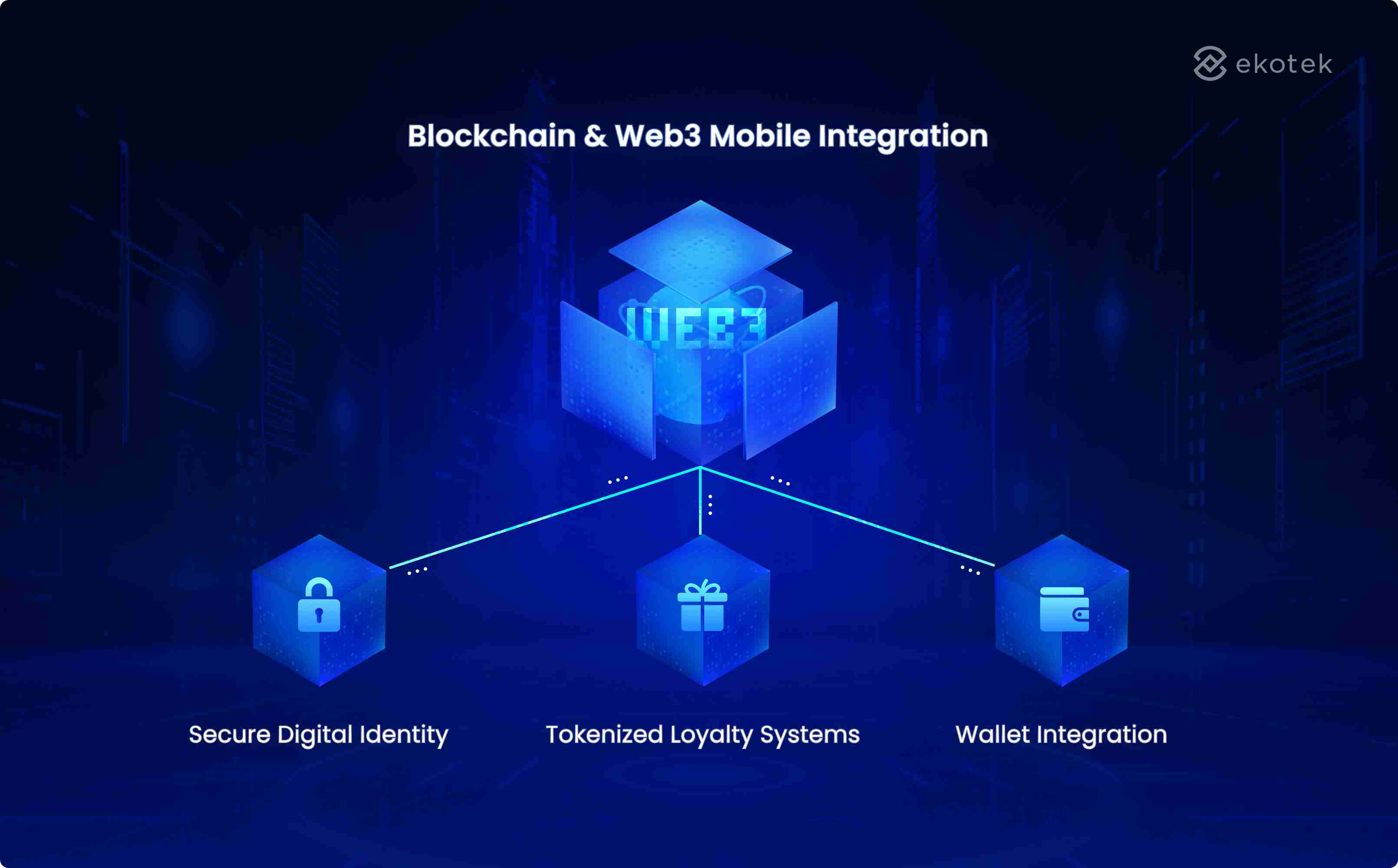
Blockchain and Web3 technologies are increasingly integrated into mobile applications to enhance security, transparency, and digital ownership. While once associated mainly with cryptocurrencies, Web3 integration is now expanding into enterprise use cases across finance, retail, gaming, and digital services.
Decentralized identity solutions allow users to control their credentials without relying solely on centralized databases. Mobile apps can leverage blockchain to:
Enable tamper-proof identity verification
Reduce fraud and identity theft risks
Simplify cross-platform authentication
Improve compliance with data privacy regulations
For fintech, healthcare, and government-related applications, secure digital identity enhances trust while minimizing operational risk.
🔎 Learn how secure, transparent systems are transforming medical services in our guide to Blockchain in Healthcare
Traditional loyalty programs often suffer from low engagement and limited interoperability. Blockchain-based token systems allow enterprises to:
Issue transferable reward tokens
Enable cross-partner redemption ecosystems
Increase transparency in reward distribution
Encourage long-term customer participation
Tokenized incentives can create stronger engagement loops and unlock new monetization models.
🔎 See how Ekotek helped boost customer engagement through a Web3 loyalty program
Mobile wallet integration is becoming a foundational Web3 feature. Whether supporting crypto payments, digital assets, or tokenized rewards, wallets allow users to:
Store digital assets securely
Conduct peer-to-peer transactions
Access decentralized applications (dApps)
Participate in digital ecosystems seamlessly
For enterprises, integrating wallets expands payment flexibility and positions the business within emerging digital economies.
As mobile applications become mission-critical systems, enterprises can no longer rely on slow, manual release processes. Mobile DevSecOps, integrating development, security, and operations, combined with CI/CD automation is now essential for delivering reliable, secure, and scalable apps.
CI/CD (Continuous Integration / Continuous Deployment) pipelines enable teams to:
Automatically build and test code changes
Detect issues early in the development cycle
Release updates more frequently
Reduce downtime and rollback risks
This allows enterprises to respond quickly to market demands, security patches, and feature enhancements without disrupting users.
Manual testing is time-consuming and error-prone. Automated testing frameworks support:
Unit, integration, and UI testing
Cross-device compatibility validation
Performance and load testing
Regression testing before each release
Automation improves release confidence while reducing operational bottlenecks, especially important for apps with large user bases.
Security is no longer an afterthought. DevSecOps embeds security practices directly into the development lifecycle:
Automated security scanning
Vulnerability detection during code commits
Secure code review processes
Audit-ready documentation and logging
For enterprises operating in regulated industries (finance, healthcare, e-commerce), this ensures alignment with data protection laws and internal governance standards.
🔎 Compare the pros, cons, and business impact of both approaches in our guide to Manual Testing vs Automation Testing
Low-code and no-code platforms are gaining traction in enterprises looking to accelerate internal digital transformation. Instead of building every tool from scratch, organizations can rapidly develop internal applications for workflow automation, reporting, and operational management.
However, this trend requires strategic evaluation, not blind adoption.
Low-code solutions are ideal for:
Internal workflow automation
Department-level dashboards and reporting tools
MVPs for process validation
Applications with limited complexity
Non-customer-facing systems
These platforms allow faster deployment, reduced dependency on engineering teams, and quicker iteration for internal business needs.
Low-code is not suitable for:
Complex, large-scale customer-facing applications
High-performance or real-time systems
Apps requiring deep customization or advanced integrations
Products that form the company’s core competitive advantage
Over-reliance on low-code for strategic platforms can create scalability issues and vendor lock-in.
For many enterprises, the optimal approach is hybrid:
Use low-code for internal tools and rapid experimentation
Use custom development for core revenue-generating products
Ensure both systems integrate through API-first architecture
Maintain governance and security oversight across platforms
🔎 Explore 30 Web App Ideas to spark your next digital product
Data privacy is no longer just a legal requirement, it is a competitive differentiator. As global regulations tighten, enterprises must embed privacy considerations directly into their mobile app architecture rather than treating compliance as a post-launch fix.
Enterprises operating across multiple markets must navigate complex regulatory frameworks such as:
GDPR in Europe
PDPA in Southeast Asia
CCPA and other regional privacy laws
Non-compliance can result in heavy financial penalties, reputational damage, and operational restrictions. Modern mobile app development therefore requires:
Clear user consent management
Transparent data usage policies
Secure data storage and processing practices
Audit-ready logging systems
Privacy-by-design is becoming a baseline expectation.
Many regions now require sensitive data to be stored within national borders. For enterprises expanding globally, this creates architectural challenges, including:
Multi-region cloud deployment
Segmented data storage strategies
Cross-border data transfer controls
Mobile backend systems must be designed to handle geographic data separation without sacrificing performance or scalability.
Privacy-first development starts at the architecture level. This includes:
End-to-end encryption
Role-based access control
Secure API gateways
Regular vulnerability assessments
DevSecOps integration
Enterprises that proactively integrate compliance into their mobile strategy reduce legal risk while strengthening customer trust.
As mobile applications grow in complexity and user volume, backend architecture becomes a critical success factor. Cloud-native and microservices-based architectures enable enterprises to build scalable, resilient, and flexible mobile ecosystems that can evolve with business demands.
Traditional monolithic backends often struggle under rapid growth. In contrast, cloud-native and microservices architectures allow enterprises to:
Scale individual services independently
Handle traffic spikes without system-wide failures
Deploy updates to specific components without downtime
Improve fault isolation and system resilience
This modular approach reduces operational risk while supporting long-term expansion.
Modern mobile apps rely heavily on APIs to connect frontend interfaces with backend systems and third-party services. An API-first strategy ensures:
Faster frontend and backend parallel development
Easier integration with partners and external platforms
Better documentation and governance
Future-ready interoperability
For enterprises building ecosystem strategies or super apps, API-first design becomes essential infrastructure.
Serverless computing allows enterprises to run backend functions without managing server infrastructure directly. Key advantages include:
Automatic scaling
Pay-per-use cost model
Faster deployment cycles
Reduced DevOps overhead
Serverless is particularly effective for event-driven workloads, real-time processing, and MVP launches.
Not every mobile app development trend deserves immediate investment. For enterprise leaders, the key is structured evaluation, balancing innovation with business priorities, operational readiness, and long-term ROI.
Start with strategy, not technology.
Ask:
Does this trend support revenue growth?
Does it improve customer retention or acquisition?
Does it reduce operational cost?
Does it strengthen competitive positioning?
If a trend cannot clearly tie to measurable KPIs, it should not move beyond experimentation.
Evaluate whether the trend is:
Emerging: High potential, higher risk, suitable for pilot programs
Growing: Proven use cases, moderate adoption, scalable opportunities
Mature: Widely adopted, lower risk, competitive necessity
Early adoption can provide differentiation but only if your organization has the risk tolerance and technical capacity to execute.
Beyond initial development cost, enterprises must consider:
Infrastructure and scaling expenses
Security and compliance implications
Long-term maintenance overhead
Talent availability
Integration complexity with existing systems
A structured cost–benefit analysis prevents “trend chasing” and protects capital allocation.
The implementation model is as important as the technology itself.
Build in-house when:
The technology is core to your competitive advantage
You have strong internal engineering leadership
Long-term ownership and IP control are critical
Outsource or partner when:
Speed-to-market is a priority
Specialized expertise is required (AI, blockchain, AR/VR)
Internal resources are limited
You need flexible scaling without long-term hiring commitments
Strategic partnerships often reduce execution risk while accelerating deployment.
🔎 Learn how to choose the right software outsourcing vendor to scale your product efficiently and reduce delivery risk
Trend Evaluation Comparison Table
| Trend | Investment Level | ROI Potential | Best For |
|---|---|---|---|
| AI-Powered Experiences | High | High | Customer-centric platforms, fintech, e-commerce |
| Cross-Platform Development | Medium | High | Cost-efficient product launches |
| Super Apps | High | Very High (Long-term) | Ecosystem-driven businesses |
| 5G Real-Time Apps | Medium–High | Medium–High | IoT, mobility, logistics |
| AR/VR | Medium | Medium | Retail, training-intensive industries |
| Blockchain Integration | Medium | Medium–High | Fintech, loyalty ecosystems |
| DevSecOps Automation | Medium | High | Large-scale enterprise apps |
| Low-Code Internal Apps | Low–Medium | Medium | Internal process automation |
| Privacy-First Architecture | Medium | Risk Mitigation + Long-Term Trust | Regulated industries |
| Cloud-Native Backend | Medium–High | High | Scalable digital platforms |
Understanding mobile app development trends is only the first step. Competitive advantage comes from structured execution. Enterprises that systemize adoption, rather than reacting opportunistically, are the ones that turn innovation into measurable business outcomes.
Before investing in new trends, assess your current mobile ecosystem.
A comprehensive audit should evaluate:
Frontend framework and performance limitations
Backend scalability and architecture model
Security posture and compliance readiness
DevOps maturity and deployment processes
Technical debt accumulation
This baseline assessment clarifies whether your existing system can integrate new capabilities — or requires foundational upgrades first.
Trends such as AI integration, super apps, or real-time analytics require modern infrastructure.
Modernization may include:
Migrating to cloud-native or microservices architecture
Implementing API-first design
Strengthening DevSecOps pipelines
Refactoring legacy components
Without architectural flexibility, innovation becomes expensive and slow. Modern foundations enable sustainable scaling.
Avoid large, high-risk transformations.
Instead:
Prioritize high-impact use cases
Launch pilot programs or MVPs
Validate ROI through measurable KPIs
Iterate based on real user feedback
An agile roadmap reduces financial risk while accelerating learning cycles.
Not every organization has in-house expertise across AI, blockchain, AR/VR, DevSecOps, and cloud architecture.
A strategic technology partner can:
Provide specialized engineering talent
Accelerate development timelines
Reduce implementation risk
Offer architectural guidance aligned with long-term goals
The right partnership transforms trends into structured execution plans, ensuring innovation drives revenue, efficiency, and sustained competitive advantage.
Adopting modern mobile app development trends requires more than technical awareness, it demands execution excellence. For many enterprises, partnering with an experienced mobile development company accelerates transformation while reducing risk.
An experienced partner brings structured methodologies designed for complex projects, including:
Clear discovery and requirement alignment
Scalable architecture planning
DevSecOps integration
Rigorous QA and testing protocols
Transparent project governance
This ensures predictable delivery timelines, budget control, and compliance readiness, critical for enterprise-level initiatives.
Mobile innovation often benefits from insights beyond a single sector. A partner with cross-industry experience can:
Apply proven patterns from fintech, retail, logistics, or healthcare
Identify monetization strategies faster
Anticipate scalability challenges
Recommend best-fit technology stacks
This reduces trial-and-error cycles and accelerates strategic decision-making.
Enterprise projects rarely remain static. Market demands, feature expansion, and scaling requirements often shift resource needs.
A capable mobile development partner provides:
Flexible team scaling
Access to specialized expertise (AI, cloud, security, blockchain)
Dedicated squads aligned with product roadmaps
Reduced hiring and onboarding overhead
This flexibility supports long-term growth without locking the organization into rigid cost structures.
Launching an app is only the beginning. Sustainable success requires:
Performance monitoring
Security updates and patch management
Feature iteration based on analytics
Continuous UX optimization
An experienced partner ensures ongoing improvement rather than one-time delivery, transforming mobile applications into long-term strategic assets.
Mobile app development trends in 2026 are not just technological shifts, they are strategic levers for revenue growth, scalability, security, and long-term competitiveness. From AI-powered experiences and cross-platform maturity to cloud-native backends and privacy-first architecture, enterprises that evaluate and implement the right trends systematically will outperform those that react too late or invest without alignment.
If you are planning your next mobile initiative, Ekotek, a leading software development firm in Vietnam, can help you turn strategy into execution. We specialize in mobile app development, AI, blockchain, and digital transformation, supported by a team with deep technical know-how across modern tech stacks and emerging technologies. Our experience spans manufacturing, banking and finance, retail, education, logistics, and more. With end-to-end services covering consulting, development, deployment, and maintenance, along with ready-made solutions that accelerate time-to-market while remaining fully customizable, we help enterprises innovate with confidence.
Ready to future-proof your mobile strategy? Contact Ekotek today for a strategic consultation.