IT outsourcing models – Choose the best fit for your business

Picture of Dam LyLy
저자
게시됨
6 mins read
Table of Contents

Companies often have a professional team to do their own projects. However, when the situation is different from the plan, such as an increasing number of projects or skill gaps in the team, the outsourcing method may come your way. Businesses can access cost-effective solutions, accelerate project timelines, and tap into a global talent pool.

This article delves into IT outsourcing models and provides insights on how to choose the right model for your organization.

What are outsourcing and its types?

IT outsourcing refers to hiring external service providers to handle specific tasks or projects. It allows companies to focus on core competencies while leveraging specialized skills and resources. Besides, companies have access to a talent pool with cost efficiency and faster time-to-market.

There are two main types of IT outsourcing models: location-based and relationship-based.

Benefits of outsourcing development

Outsourcing development offers several advantages to businesses, making it an attractive option for companies looking to optimize their resources and accelerate project timelines:

  • Cost savings: Instead of investing in infrastructure, recruiting and training an in-house team, outsourcing allows companies to leverage external resources at a fraction of the cost.
  • Access to talent: Businesses can tap into a global network of skilled professionals with expertise in various technologies and domains. Companies can overcome skill shortages within their own workforce and leave the experience to professionals who are dedicated to specific areas of development.
  • Faster time to market: Outsourcing providers often have extensive experience working on similar projects, enabling them to perform best practices and optimize development cycles. By reducing time to market, businesses can gain a competitive edge and satisfy customer demands.
  • Focus on core competencies: By delegating time-consuming tasks to external specialists, companies can concentrate on strategic plans, innovation, and customer service activities.

What are the outsourcing models?

1. Location-based outsourcing model

a. Onshore development

Onshore development means assigning tasks to service providers within the same country. This model offers advantages such as cultural alignment, language proficiency, and minimal time zone differences. Onshore providers are subject to the same legal and regulatory frameworks, which can simplify compliance and reduce risks.

However, the cost of service providers is different in each country so it may have higher cost implications compared to other location-based outsourcing models. For example, your company is based in New York, USA and you hire a development team located in Seattle, Washington. Both locations are within the same country, making it an onshore development model.

b. Nearshore development

Working with a third party in nearby countries or regions is called nearshore development. Companies can choose providers in the same time zone, enhancing communication and project management. Nearshore providers may share cultural similarities that facilitate smoother cooperation. This model is more cost-effective than onshore development due to low labor costs in some countries. Countries with higher labor costs, such as Germany or the United Kingdom tend to utilize IT outsourcing services from lower-cost neighboring countries like the Czech Republic, Romania and Poland.

c. Offshore development

Offshore development refers to delegating tasks to other teams located in geographically distant countries. Companies can benefit from significant cost advantages, access to a diverse talent pool, and quick development cycles. Due to geographic distance, it may present challenges related to communication, cultural differences, and time zone gaps. Effective communication and project management become crucial in mitigating these challenges and ensuring successful collaboration. For example, a company in the US hires offshore developers in Vietnam to develop a mobile game application.

📌 Read more: Software development company in Vietnam can help startups save costs

d. Location-based types of IT outsourcing – the comparison

When considering location-based types of IT outsourcing, it is important to understand the key differences between onshore, nearshore, and offshore outsourcing. We’ve summarized some main points of differences in the table below:

Factor Onshore Nearshore Offshore
Culture and time zone Same Slight difference Significant difference
Cost High cost Competitive cost Low cost
Talent resource Limited Sufficient Large

2. Relationship-based IT outsourcing models

a. Staff augmentation

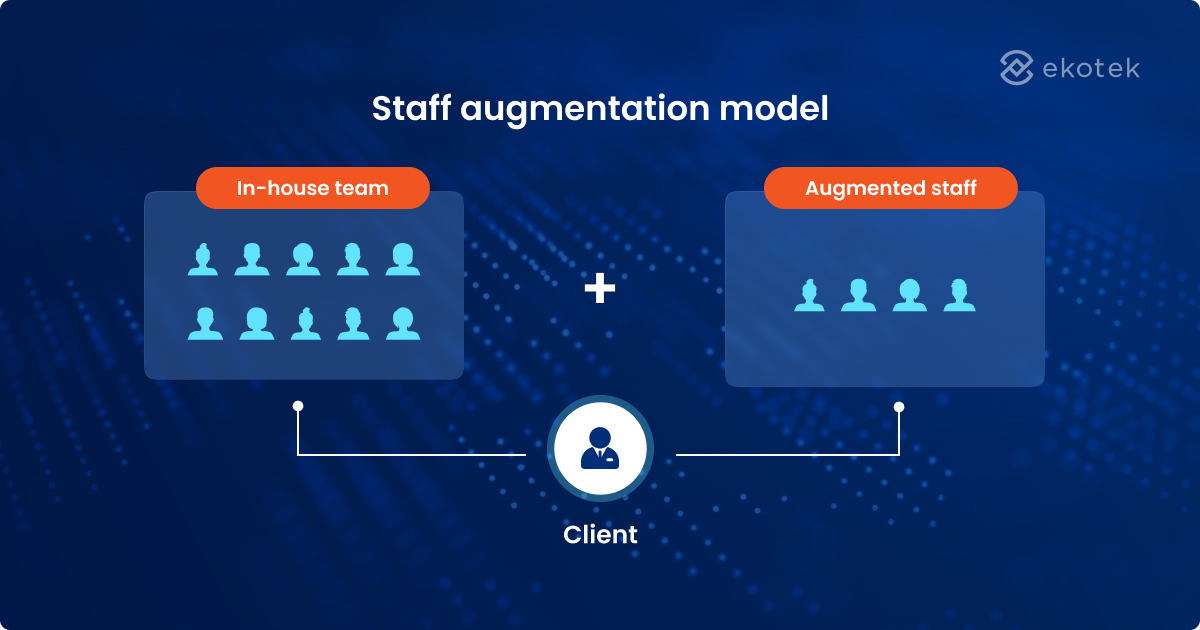
Staff augmentation is supplementing an organization’s workforce with external professionals on a temporary basis. The outsourcing vendor assists in choosing professionals with the required skills and experience to meet project requirements. The added resources integrate with the client’s team, working under their direct supervision and following established processes. This model provides flexibility, as external experts integrate seamlessly with the existing team, allowing for efficient resource allocation and knowledge transfer.

staff augmentation

b. Dedicated team model

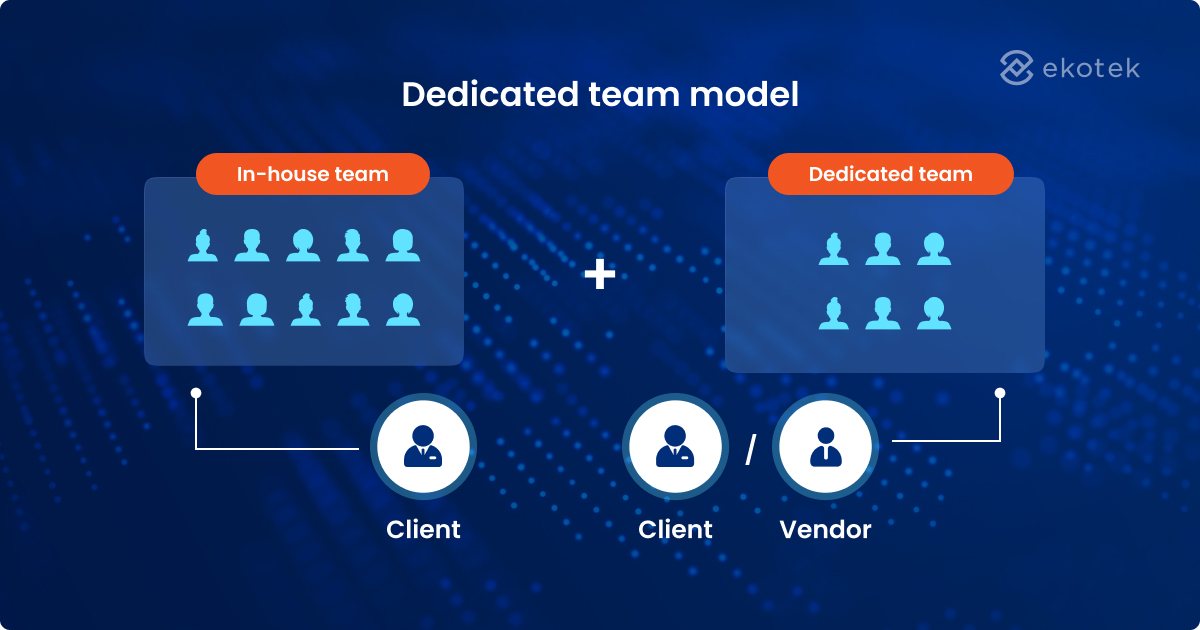
The dedicated team operates as an extension of the client’s in-house team, working closely with them to achieve project goals. The client can share control and management with the vendor. Otherwise, If the client lacks an in-house tech expert, the outsourcing vendor will take overall control of project deliveries upon agreement. This approach is best for long-term projects or those requiring a high level of coordination between team members. Hiring a dedicated team is more expensive than staff augmentation due to additional service charges such as project management, further support, and incurring service fees.

dedicated team

c. Project-based model

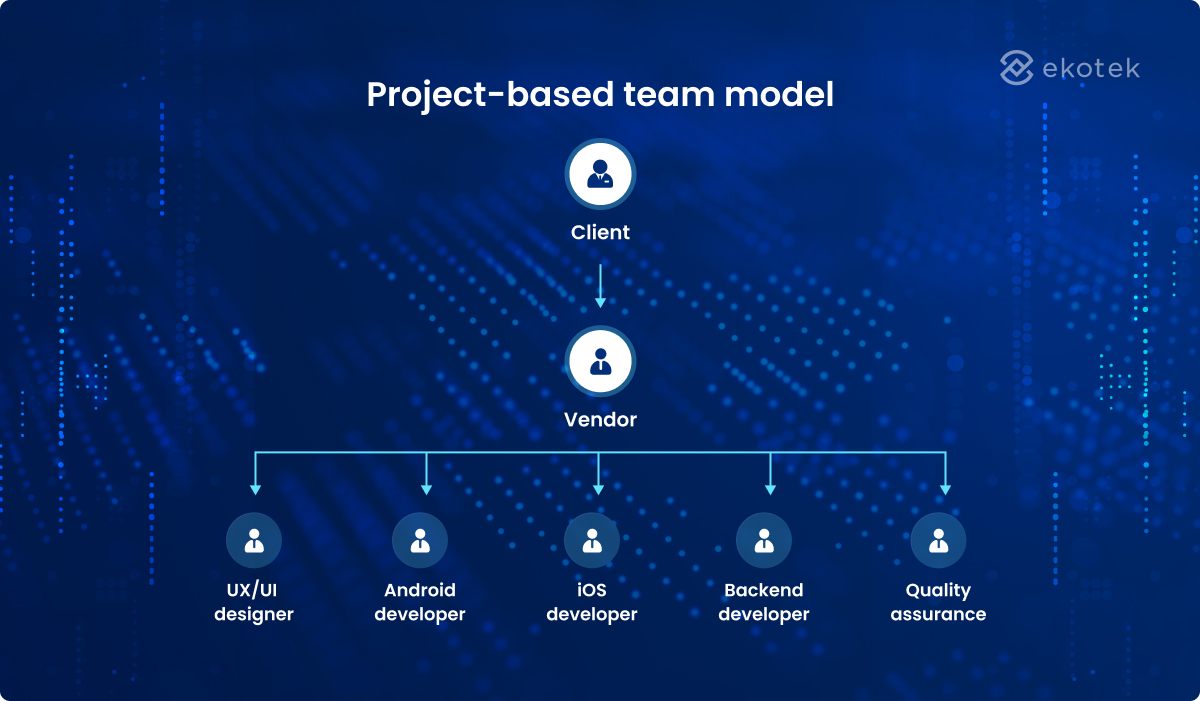
Organizations use the project-based model to outsource complete projects to third-party service providers. The project team has experience in executing similar projects and can provide best practices. As the pricing is typically based on the scope and complexity of the project, businesses allocate resources accordingly, without the need for long-term commitments or overhead costs. However, it is important to prepare specific requirements and timelines in advance, which helps reduce the project management burden and achieve high-quality deliverables.

Project-based

d. Relationship-based types of IT outsourcing – the comparison

Businesses should consider factors such as the desired level of control, cost and budget, the needed expertise, and team scalability when selecting a relationship-based outsourcing type. Let’s look at the main points for a quick reference:

Factor Staff augmentation Dedicated team Project-based model
Control Client Client + Vendor Vendor
Cost Low Medium to high Depend on scope
Expertise (client) Must have Recommended Not required
Team scalability High Medium Low

📌 Read more: Staff Augmentation and IT Outsourcing

How to select an outsourcing model that fits your needs

With various types of outsourcing models, you will need some based criteria to select the one that fits your business needs. By evaluating these factors, businesses can make informed decisions that align with their specific goals. Here are key points to consider when selecting an outsourcing model

  • Project requirements: Some projects may require specialized expertise that are not available in-house. In such cases, outsourcing models like staff augmentation or the dedicated team model may be suitable. For well-defined projects, the project-based model could be a viable option.
  • Project timelines: Outsourcing models that offer quick ramp-up times and accelerated development cycles, offshore development may be preferable. If you require continuous development and long-term collaboration, the dedicated team model or staff augmentation can provide ongoing support and flexibility.
  • Level of control: The project-based model allows you to outsource the entire project with minimal involvement in day-to-day operations. The dedicated team model provides balance control and project management capabilities. If you prefer seamless integration with your existing team and direct management, staff augmentation can be an effective choice.
  • Cost: Onshore development is typically associated with higher costs compared to the other models. Nearshore development offers a more cost-effective alternative to onshore development. Offshore development provides the most cost savings among the three models. If you are based in a high-cost country like the United States and choose to outsource to countries such as India or Vietnam, you can expect considerably lower hourly rates.

📌 Read more: Why Vietnam Is The Go-to Destination For Outsourcing Services

Future of outsourcing & how Ekotek can help you?

According to the IMARC report, the global IT outsourcing market reached $550 billion in 2022 and is expected to reach $720 billion by 2028, indicating a strong demand for outsourcing services across industries. Deloitte (2022) also stated that 76% of executives delegated their IT services via third-party models.

The pricing of IT outsourcing services is predicted to increase over time, due to high demand and a corresponding critical IT skills shortage. However, it is worth noting that advancements in technologies such as automation, artificial intelligence, and cloud computing have the potential to optimize outsourcing processes, leading to more cost-effective solutions in the future.

Grand View Research reported China and India continued to be the leading destinations for IT outsourcing services, offering a vast pool of skilled professionals and competitive pricing. They have established themselves as global leaders in software development and IT services. Southeast Asia countries like Vietnam and Philippines are expected to increase their position in the global outsourcing market. This dominance is due to the region’s cost-effective labor force, strong technical expertise, and improving infrastructure.

Ekotek is a leading IT company in Vietnam specializing in two main IT outsourcing services: staff augmentation and a dedicated team. With our extensive experience and expertise in working with over 120 clients worldwide, we offer a wide range of development services, including mobile and web application development, software engineering, UI/UX design, and more. Whether you need to bridge skill gaps in your existing team or assemble a dedicated team for a specific project, Ekotek is committed to delivering exceptional technical talent and ensuring successful project outcomes.

Succeed in a rapidly evolving digital landscape today
Browse our IT staffing services and see what suits you

Contact us

공유하기
Facebook
Twitter
LinkedIn
최고의 인사이트를 이메일로 받아보세요

    관련 게시물

    저희가 어떻게 도와드릴 수 있는지 확인해 보세요!

    베트남 아웃소싱을 고려하고 계신가요?

    베트남의 주요 21개 아웃소싱 회사를 모든 분야와 산업별로 다룬 가이드와 함께 귀사에 가장 적합한 회사를 찾아보세요.
    Table of Contents

    저희가 어떻게 도와드릴 수 있는지 확인해 보세요!

    전략 상담 예약을 위해 이메일을 남겨주세요 – 전액 무료로 제공됩니다!

      Dylan Dong Do
      최고경영자
      딜런 동 도
      Dylan Dong Do는 제품 및 ITO 기업 전반에 걸쳐 15년 이상의 경영 경험을 보유한 숙련된 리더입니다. 그의 리더십 하에 Ekotek은 5년 만에 소규모 팀에서 200명 이상의 숙련된 전문가들로 구성된 번창하는 조직으로 성장하였습니다.

      Dylan의 경력 전반에 걸쳐 그는 놀라운 성과를 달성해 왔습니다. 2009년에는 batdongsan.com.vn 개발에 핵심적인 역할을 하여 베트남 최고의 부동산 매물 플랫폼으로 자리매김하였습니다. 2018년에는 VTI의 Chief Operating Officer로 승진하여 30명 규모의 팀을 300명이 넘는 강력한 조직으로 성장시키는 데 기여하였습니다.

      기술 혁신을 일상생활에 통합하고자 하는 열망으로 Dylan Dong Do는 Ekotek을 설립하였습니다. 그는 회사의 방향성을 설정하기 위해 첨단 기술에 대한 지식과 기술을 꾸준히 업데이트하여 글로벌 트렌드에 부응하고 고객의 요구에 더욱 효과적으로 대응할 수 있도록 하고 있습니다.